CV
Profile
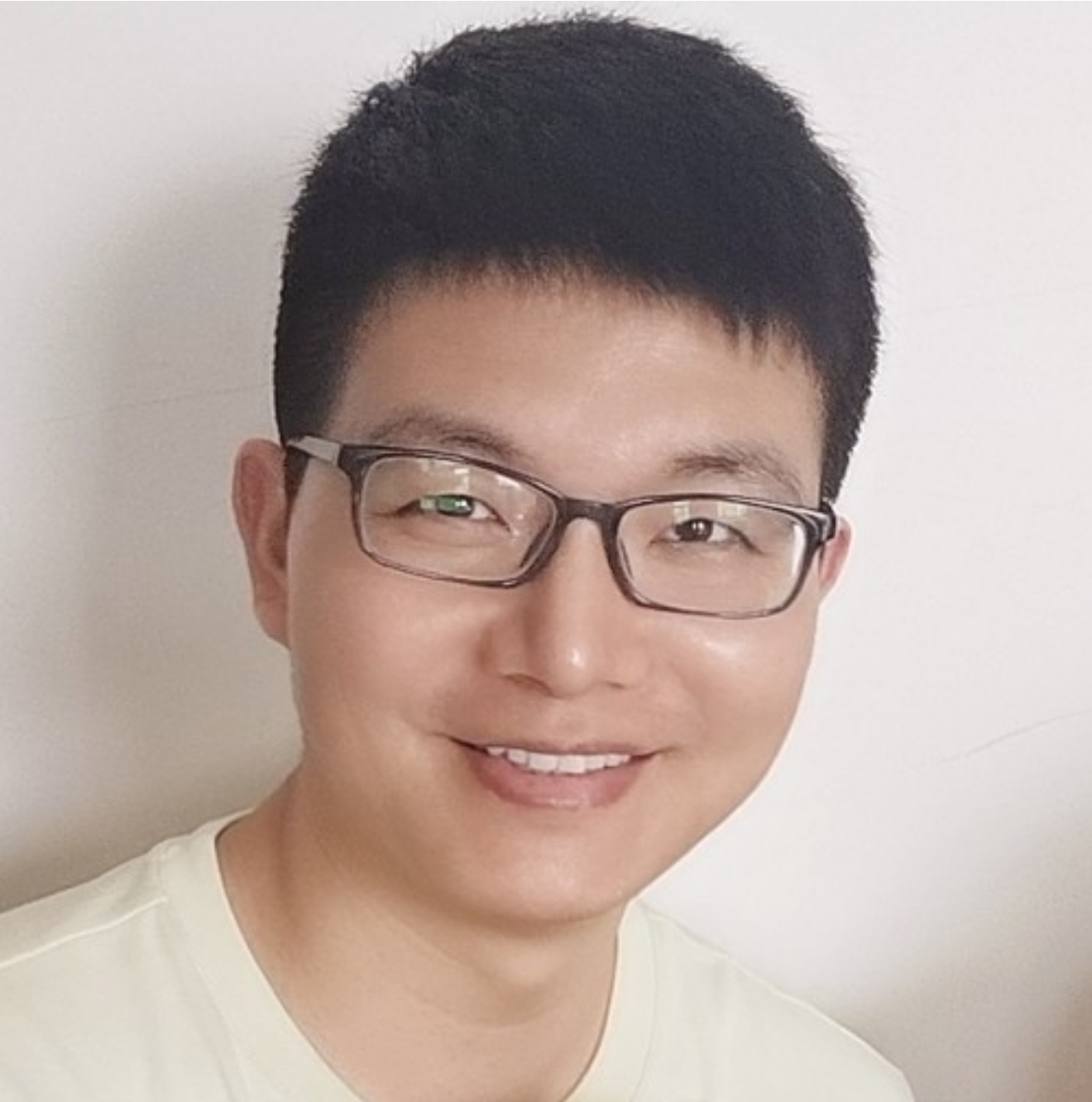
Jiangping Huang is a faculty member and master supervisor at Chongqing University of Posts and Telecommunications (CQUPT). He received his Ph.D. in Computer Science from Wuhan University and worked as a postdoctoral research fellow at Nanyang Technological University, Singapore from 2022 to 2024.
His research lies at the intersection of artificial intelligence, intelligent software engineering, multi-agent systems, and intelligent robotics, with a particular focus on LLM-based software engineering, intelligent requirements engineering, code generation and self-repair, trace-driven debugging, cognitive multi-agent collaboration, and human-AI/robot collaboration.
He has participated in a key project of the National Natural Science Foundation of China, served as a major contributor to several NSFC and national-level projects, and led multiple provincial and ministerial projects. His work has resulted in nearly 20 academic papers, more than 10 national invention patent applications, more than 10 software copyrights, and a Chongqing Science and Technology Progress Award. He also serves as a reviewer for conferences and journals including AAAI, EMNLP, NLPCC, ACM TKDD, and ACM TALLIP.
Positions and Education
2018.01-present, Faculty Member, Chongqing University of Posts and Telecommunications (CQUPT)
2022.07-2024.07, Postdoctoral Research Fellow, Nanyang Technological University, Singapore
Ph.D. in Computer Science, Wuhan University
Research Interests
Artificial Intelligence & Multi-Agent Systems: Large Language Model Agents, Multi-Agent Collaboration, Cognitive Reasoning, Memory and Reflection, Trustworthy and Adaptive AI
Intelligent Software Engineering: Intelligent Requirements Engineering, Code Generation and Repair, Trace-Driven Debugging, Software Reverse Engineering, Requirements-Code-Test Alignment
Intelligent Robotics & Human-AI Collaboration: Task Planning, Environment Perception, Embodied Intelligence, Human-Robot Collaboration, Autonomous Decision Making
Selected Recent Publications
TraceCoder: A Trace-Driven Multi-Agent Framework for Automated Debugging of LLM-Generated Code. ICSE 2026, 2026. CCF A, Top-tier SE Conference.
Structure-guided function-level code generation with LLMs via UML activity diagrams. Neurocomputing, 2026.
Envisioning Intelligent Requirements Engineering via Knowledge-Guided Multi-Agent Collaboration. ASE 2025, 2025. CCF A, Top-tier SE Conference.
FUMMER: A fine-grained self-supervised momentum distillation framework for multimodal recommendation. Information Processing & Management, 2024.
A Dynamic Adaptive and Resource-Allocated Selection Method Based on TOPSIS and VIKOR in Federated Learning. Neural Processing Letters, 2024.
StructAM: Enhancing Address Matching through Semantic Understanding of Structure-aware Information. LREC-COLING 2024, 2024.
Teaching
Computer Science Introduction, Undergraduate, 2018-2022 Spring, Co-teaching, Sino-US program.
Data and Algorithm Fundamentals (Data Structures), Undergraduate, 2019-2020 Fall, Instructor.
Computer Networks, Undergraduate, 2019-2021 Fall, Instructor.
Cross-Media Information Processing Technology, Graduate, 2020-2022 Spring, Co-teaching.
Linux Program Development, Undergraduate, 2024-2026 Spring/Fall, Instructor.
Software Requirements Engineering, Graduate, 2026 Spring, Co-teaching.
Student Supervision
尹嘉珂, 基于树莓派的智能物联网案例设计与实现, 优秀本科毕业设计(论文), 2018-2022. Outcome: 重庆邮电大学 -> 北京科技大学,保研.
蒲雨欣, 基于预训练语言模型的故事生成系统设计与实现, 优秀本科毕业设计(论文), 2018-2022. Outcome: 重庆邮电大学 -> 电子科技大学,保研.
袁书伟, 基于注意力机制的中文幽默识别与应用研究, 优秀本科毕业设计(论文), 2016-2020. Outcome: 重庆邮电大学 -> 东南大学,保研.
赵水心, 面向中外合作办学课程的智能辅助学习系统研究与实现, 优秀本科毕业设计(论文), 2020-2024. Outcome: 重庆邮电大学 -> 北京邮电大学,保研.
叶文广, 多智能体协同驱动的代码生成与自修复方法研究, 研究生, 2023-2026. Outcome: 重庆邮电大学 -> 武汉大学,攻读博士.
Awards
2018 Chongqing Science and Technology Progress Award
Outstanding Teacher, 2019-2020 academic year
Outstanding Teacher, 2021-2022 academic year
Outstanding Teacher, 2024-2025 academic year
Professional Service
- Reviewer for AAAI, EMNLP, NLPCC, ACM TKDD, and ACM TALLIP
Contact
Email: huangjp@cqupt.edu.cn
WeChat: jiangpinghuang(添加好友时请注明来意)
Research Group: https://csma-research-group.github.io